A recent feature in SMACNA’s SMACNews highlights Budde Sheet Metal Works’ commitment to engineering precision, craftsmanship, and collaboration through the story of the Montgomery County Law Enforcement Memorial.
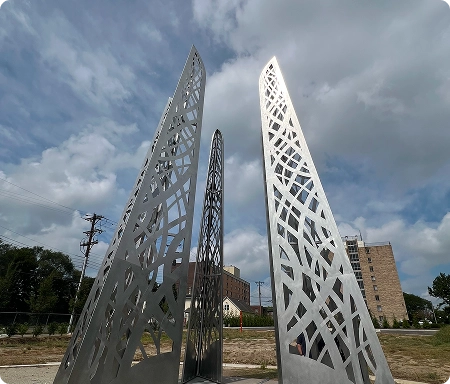
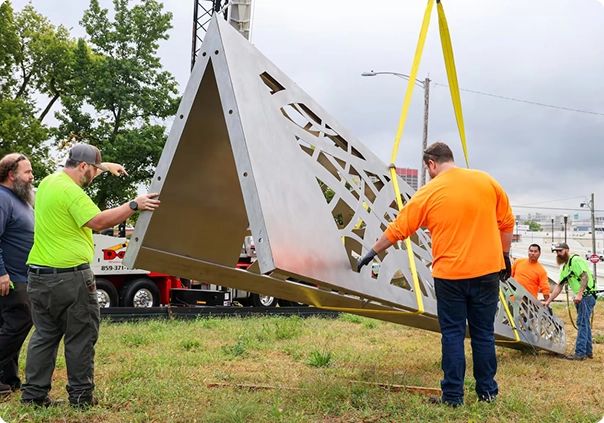
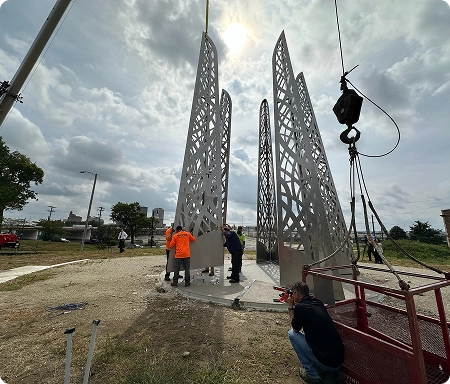
Set above the Miami River in Dayton, Ohio, it commemorates 49 law enforcement officers who have fallen in the line of duty, and the first stage of the memorial is set to be complete this fall by installing five 30-foot stainless steel spires.
Here are some highlights of the project as featured in SMACNA’S SMACNews.
Early Collaboration Turns Vision Into Reality
This project offers valuable insights not just into architectural metalwork, but into how modern sheet metal fabrication supports complex, design-driven builds.
One of the most important themes from the project is early collaboration between stakeholders. Michael Worley, Project Manager for Budde Sheet Metal Works, explains that a local architect engaged Budde after working with them in the past:
“We have done a couple of projects for him in the past, so he came to us with a concept. This was before they completed the funding for this project, probably a year and a half ago.”
Early involvement allowed Budde to move beyond fabrication and into design development, helping translate a conceptual vision into manufacturable geometry.
Key Learning:
Bringing your fabricator into the design phase early can:
Improve manufacturability
Reduce redesign cycles
Accelerate quoting and production
Engineering + Craftsmanship = Complex Geometry
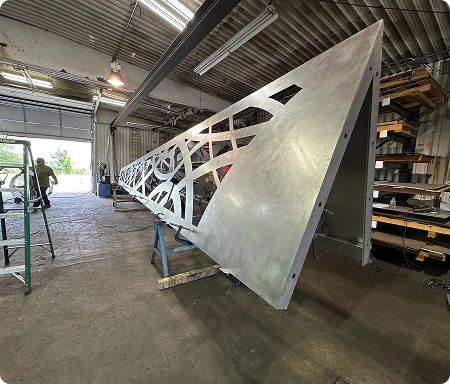
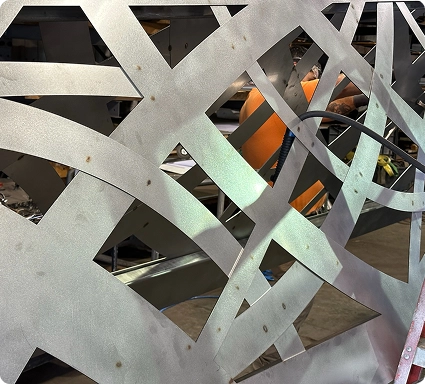
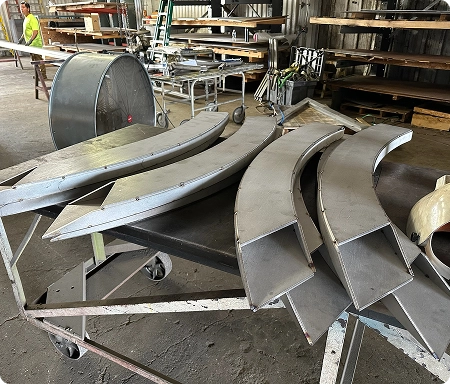
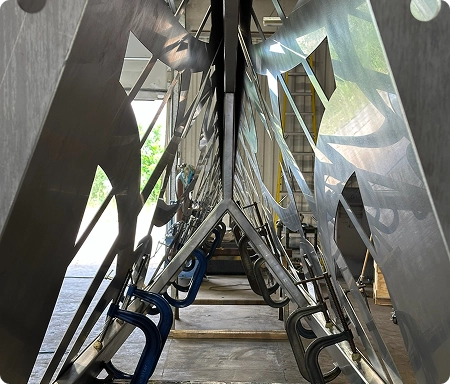
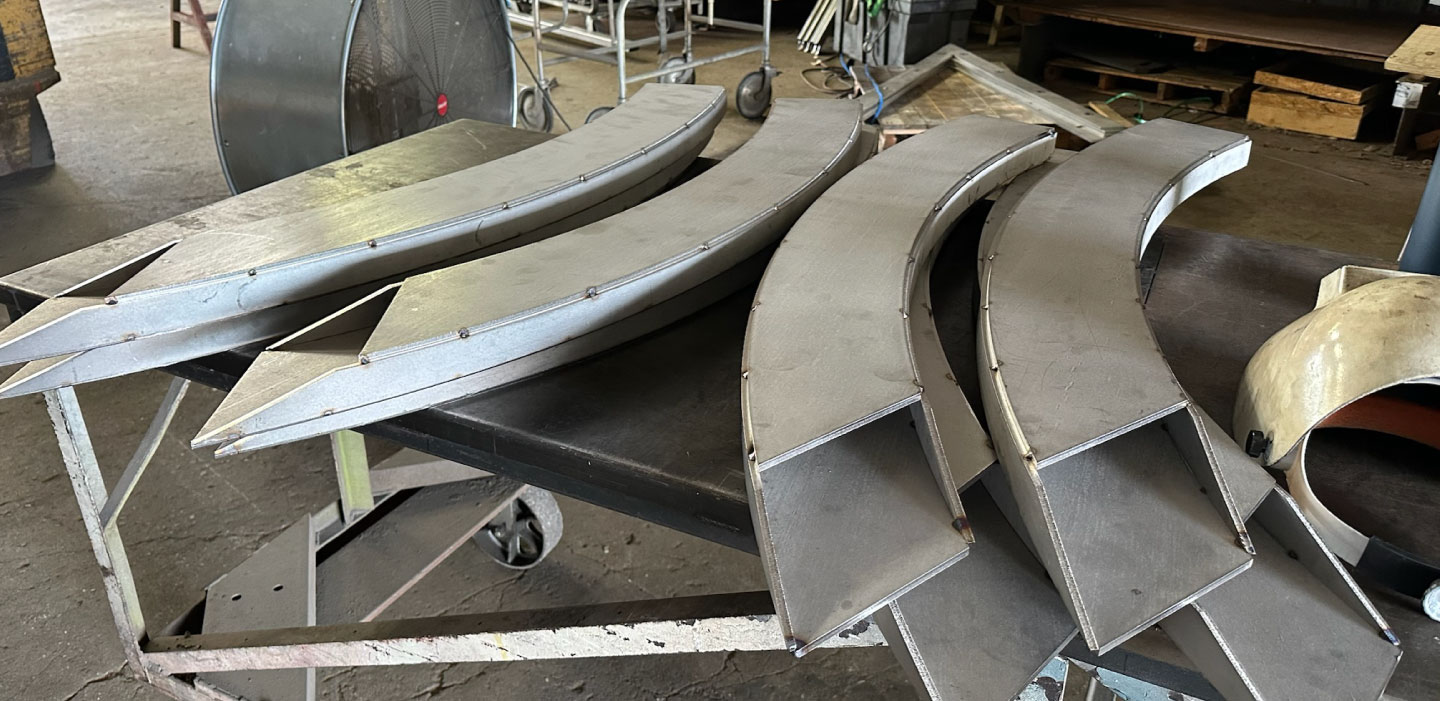
The stainless steel spires are each approximately 30 feet tall and require more than standard fabrication techniques. The team chose to put a weaving geometry in the spires to give the project a 3D look.
This “woven” geometry introduced challenges in flat pattern development, assembly sequencing, and structural integrity, but the Budde team leaned on strong communication and prototyping to come up with creative solutions.
Key Learning:
Complex forms, especially curved or layered geometries, require:
Advanced CAD development
Iterative prototyping
Close coordination between design and fabrication
Design Complexity Lives in the Details
One of the most revealing insights from the project is where the real difficulty occurred. Worley described one of the project’s biggest challenges by saying, “The woven details were the biggest issue… significant planning and back-and-forth.”
Even when a design looks straightforward, small details, like interwoven elements, can drive the majority of engineering effort.
Key Learning:
When designing sheet metal parts:
Seemingly minor features can dominate fabrication complexity
Expect iteration when combining aesthetics with structural function
Plan for design validation early in the process
Precision Fabrication Meets Advanced Equipment
Budde leveraged high-powered laser cutting to execute the design by using the 4000-watt Trumpf laser to cut the spires. This highlights how modern fabrication technology enables complex architectural features that were previously difficult or impossible.
Key Learnings:
Laser cutting allows for intricate cut patterns and tight tolerances
Advanced equipment expands design possibilities, but still requires DFM discipline
What This Project Says About Modern Sheet Metal
This project reinforces a broader industry truth: Custom sheet metal is not just fabrication. It’s engineering-driven problem solving.
Custom architectural sheet metal allows for building-specific design and unique structural expression that standard systems cannot match.
Project Highlights
If you’re designing complex sheet metal components or architectural elements, this project highlights a few critical lessons: