Press Brake Forming Is More Than Just Bending Metal
For manufacturers building agricultural equipment, industrial machinery, heavy equipment, and other fabricated products, press brake forming plays a critical role in producing components that meet precise dimensional, structural, and assembly requirements.
While some shops offer press brake forming as a standalone service, many OEMs benefit most when it is integrated with other fabrication processes under one roof. Combining cutting, forming, welding, machining, and finishing services can reduce lead times, improve quality control, and simplify supply chain management.
Understanding how press brake forming fits into the broader fabrication process can help engineers and purchasing teams make better sourcing decisions.
What Is Press Brake Forming?
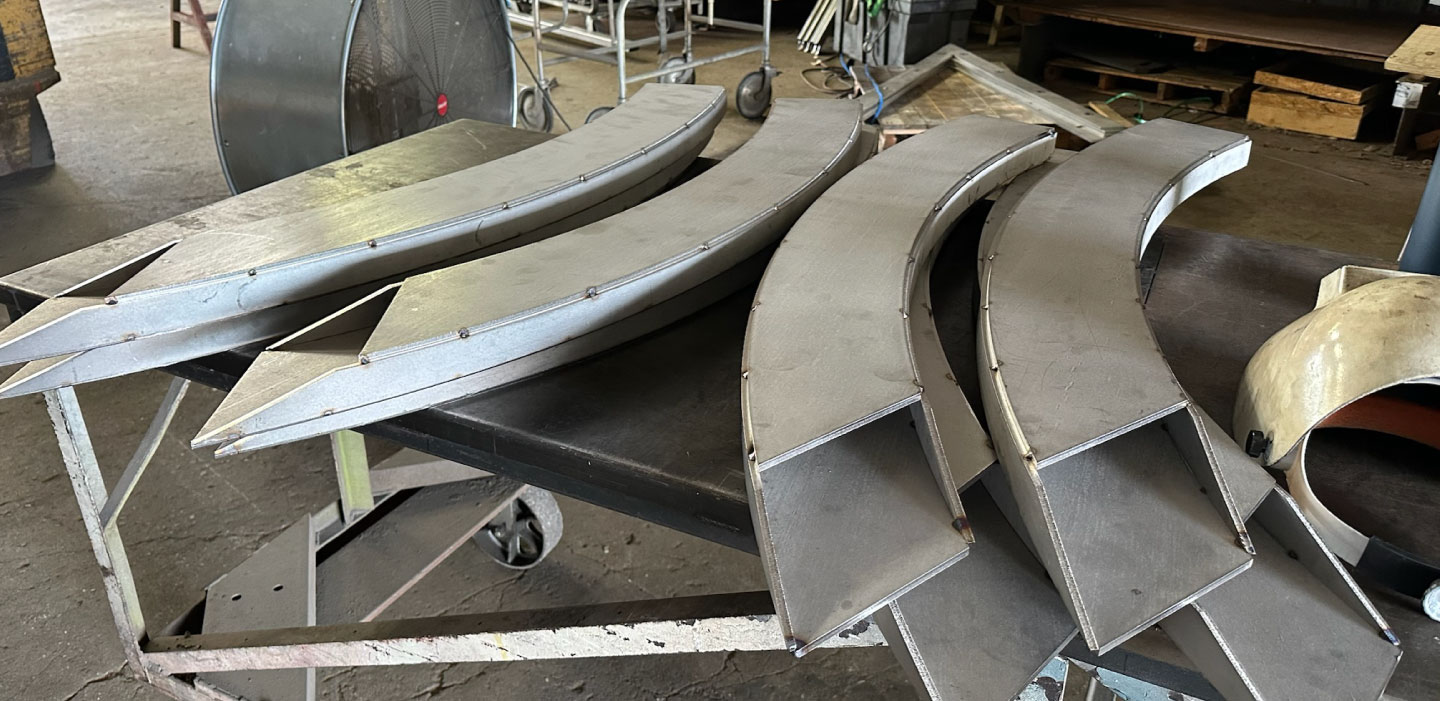
Press brake forming is a manufacturing process that uses a press brake machine and tooling to bend sheet metal into specific shapes and angles. The process can create simple bends, complex geometries, channels, brackets, enclosures, structural components, and custom fabricated parts.
Modern CNC press brakes provide high levels of precision and repeatability, allowing manufacturers to consistently produce parts that meet tight tolerances across production runs.
Common materials used in press brake forming include:
- Carbon steel
- Stainless steel
- Aluminum
- Galvanized steel
- High-strength alloys
Because the process is highly versatile, press brake forming is used across industries ranging from agriculture and construction equipment to industrial machinery and transportation.
Benefits of Using Press Brake Forming
Many fabricated products begin as flat sheet metal. Before those parts can be assembled into finished products, they often require carefully controlled bends that provide strength, functionality, and dimensional accuracy.
Properly formed components can:
- Increase structural integrity
- Improve product durability
- Reduce assembly complexity
- Support tight-fitting assemblies
- Eliminate the need for additional parts
Poorly executed bends, however, can lead to dimensional inconsistencies, assembly issues, and increased scrap rates.
This is why manufacturers often look for fabrication partners with extensive forming capabilities and experience working with complex engineered components.
Services That Complement Press Brake Forming
Press brake forming is rarely the first or last step in the manufacturing process. Instead, it serves as a central operation that connects multiple fabrication processes.
Laser Cutting
In most fabrication projects, laser cutting occurs before forming.
Laser cutting creates the flat blank that will later be bent into its final shape. Accurate cutting is essential because hole locations, slots, tabs, and edge features must align properly after bending.
When laser cutting and press brake forming are performed by the same fabrication partner, manufacturers benefit from:
- Improved dimensional accuracy
- Faster production flow
- Reduced material handling
- Better bend consistency
This integration helps ensure that formed parts match engineering specifications from the beginning of production.
CNC Machining
Some components require machining operations before or after forming.
For example, a formed bracket may need:
- Precision holes
- Tapped features
- Counterbores
- Tight-tolerance surfaces
Integrating CNC machining with press brake forming allows manufacturers to produce more complete components without transferring work between multiple suppliers.
This can reduce lead times while improving overall quality control.
Welding and Assembly
Many formed components become part of larger weldments or assemblies.
Examples include:
- Equipment frames
- Structural supports
- Agricultural machinery components
- Industrial enclosures
- Heavy equipment assemblies
Press brake forming creates the geometry needed for these assemblies, while welding joins the components into finished structures.
When forming and welding are managed by the same fabrication team, fit-up issues can be identified and corrected earlier in the production process, helping avoid costly delays.
Hardware Installation
Many fabricated parts require hardware such as:
- PEM fasteners
- Studs
- Nuts
- Standoffs
- Inserts
These features are often installed after cutting and before final assembly.
Combining forming and hardware insertion under one supplier helps ensure proper placement and alignment while reducing secondary operations.
Finishing Services
After fabrication is complete, components often require surface finishing to improve appearance, durability, and corrosion resistance.
Common finishing processes include:
- Powder coating
- Painting
- Plating
- Galvanizing
When finishing partners work closely with fabrication teams, manufacturers can achieve more consistent quality while simplifying project management.
Working with a Fabricator That Offers Multiple Services
For OEMs and equipment manufacturers, supplier consolidation has become increasingly important.
Managing separate vendors for cutting, forming, welding, machining, and finishing can create unnecessary complexity throughout the supply chain.
Working with a fabrication partner that offers multiple capabilities can provide several advantages.
Reduced Lead Times
Parts move directly between operations without requiring transportation between suppliers.
This helps shorten production schedules and improves responsiveness when demand changes.
Improved Quality Control
When multiple fabrication processes are performed under one quality system, dimensional issues can be identified earlier and corrected before they impact downstream operations.
Simplified Supply Chain Management
Purchasing teams have fewer suppliers to manage, fewer purchase orders to issue, and fewer logistics challenges to coordinate.
Better Design for Manufacturability Support
Integrated fabrication teams often identify opportunities to simplify designs, reduce costs, and improve manufacturability before production begins.
This collaboration can help engineers avoid costly revisions later in the project.
What Manufacturers Should Look for in Press Brake Forming Capabilities
Not all forming operations offer the same level of capability.
When evaluating a fabrication partner, manufacturers should consider:
- CNC press brake technology
- Maximum forming capacity
- Material expertise
- Tolerance capabilities
- Quality control systems
- Experience with complex assemblies
- Additional fabrication services available in-house
A supplier that can support the entire fabrication lifecycle often delivers greater long-term value than one focused solely on a single process.
Choosing the Right Fabrication Partner
Press brake forming is an essential part of modern sheet metal fabrication, but its true value comes from how it connects with the rest of the manufacturing process.
Budde Sheet Metal Works supports manufacturers with comprehensive metal fabrication capabilities designed to help customers move from raw material to finished component more efficiently. By integrating key fabrication processes under one roof, manufacturers can reduce supplier complexity while maintaining the quality and consistency their products require.
If you’re evaluating fabrication partners for an upcoming project, contact Budde Sheet Metal Works to discuss your requirements and request a quote.