Identification, Traceability, and Design Considerations
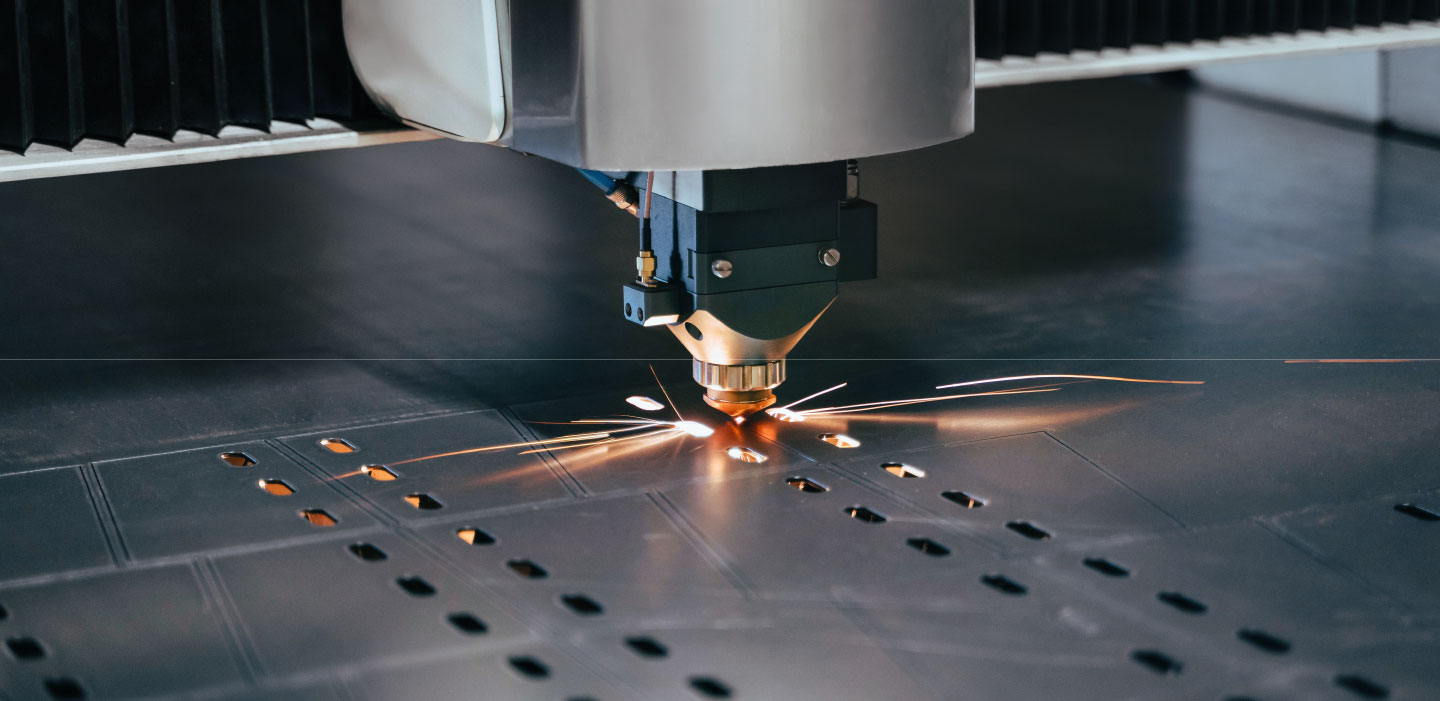
Laser etching gives manufacturers a fast, precise way to add permanent identification to parts and assemblies. Using a focused laser beam, the process creates a controlled mark on the material’s surface without requiring ink, labels, or physical cutting tools.
When laser etching is integrated with other fabrication processes, manufacturers can receive finished components that are already cut, formed, identified, and ready for assembly.
What Is Laser Etching?
Laser etching uses concentrated energy to alter the surface of a material and create a visible mark. The laser follows a programmed digital pattern, allowing it to reproduce text, codes, graphics, and other information with high consistency.
The process is commonly grouped under the broader category of laser marking. Terminology can vary among manufacturers, but the key distinction is generally the way the laser interacts with the material:
- Laser marking is an umbrella term for processes that use a laser to create identifying information.
- Laser etching changes a shallow layer of the material’s surface to produce a permanent mark.
- Laser engraving removes material to create a deeper recessed mark.
The appropriate method depends on the material, desired appearance, required durability, cycle time, and operating environment.
Common Industrial Applications for Laser Etching
Laser etching can be used on individual components and completed assemblies. Because the process is digitally controlled, it supports both repeated marks and variable information that changes from part to part.
Common applications include:
- Part and model numbers
- Sequential serial numbers
- Barcodes
- Data matrix codes
- Logos and branding
- Safety warnings
- Compliance information
- Assembly instructions
- Electrical panel labels
- Reference diagrams
- Measurement scales
- Equipment identification plates
A manufacturer may use one mark to display human-readable information and a second machine-readable code to connect the part with production records. This can help quality teams document manufacturing history, verify component identity, and manage parts across their service lives.
Laser etching is useful for agricultural and heavy equipment components because printed labels may be exposed to moisture, dirt, abrasion, cleaning, and outdoor conditions. The suitability and visibility of any mark should still be validated against the part’s actual service environment.
Materials That Can Be Laser Etched
Laser etching and marking can be applied to a wide range of materials, including:
- Carbon steel
- Stainless steel
- Aluminum
- Coated or anodized metals
- Brass
- Copper
- Plastics
- Specialty and exotic materials
Each material reacts differently to laser energy. Alloy composition, surface finish, coating, color, reflectivity, and thermal properties can all affect the finished mark.
For example, the settings used to create a clear mark on stainless steel may differ significantly from those required for aluminum or plastic. The selected laser, power, speed, frequency, and focal position must be matched to the material and desired result.
Benefits of Laser Etching for Manufactured Components
Durable Part Identification
Laser-etched information becomes part of the component’s surface. There are no labels to apply, adhesives to cure, or ink supplies to manage. A properly specified mark can remain readable through handling, assembly, and normal use.
High Precision
A programmed laser can produce small text, detailed graphics, and compact machine-readable codes. This is valuable when identification must fit into a limited area or align with other part features.
Repeatable Results
Once marking parameters and artwork have been approved, the same program can be used across a production run. This supports consistent placement, sizing, and appearance.
Variable Data Capabilities
Laser systems can mark changing information, including serial numbers, date codes, lot numbers, and sequential identifiers. Variable data allows each part to receive a unique identity without creating a new physical stencil or tool.
Flexible Digital Setup
Marking files can be adjusted digitally when a logo, label, or part revision changes. This flexibility can support prototypes, short runs, custom components, and ongoing production programs.
Cleaner Production Flow
When etching is coordinated with custom sheet metal fabrication, parts can remain within a managed production workflow. This reduces supplier handoffs, transportation, scheduling conflicts, and the risk of parts being mixed between operations.
Laser Etching Design Considerations
Successful laser etching begins with a clearly defined marking requirement. The drawing should identify what information must be marked, where it belongs, and how it should be oriented.
Important design considerations include:
- Available marking area
- Text size and font
- Code dimensions and required scanning distance
- Contrast against the base material
- Mark depth, when applicable
- Surface finish or coating
- Position tolerances
- Orientation after forming or assembly
- Exposure to abrasion, chemicals, heat, or weather
- Whether information will be fixed or variable
Mark placement should be evaluated within the entire fabrication sequence. A bend may move the mark out of view, welding may expose it to heat, and grinding or finishing may affect readability. Marks placed near an edge, hole, or formed feature may also distort or become difficult to scan.
These sheet metal design guidelines provide additional considerations for coordinating part features with cutting, forming, and assembly requirements.
When Should Etching Occur in the Fabrication Process?
The best stage for laser etching depends on the component. Flat blanks can be easier to position and process before forming, especially when many parts are nested on a sheet. Completed components may need to be marked later to confirm the correct orientation or apply final serial information.
A typical production plan may consider etching:
- After laser cutting and before forming
- After forming but before welding
- After welding and finishing
- At final assembly, when unique data is assigned
Coordinating laser cutting, etching, and forming with one supplier allows manufacturing teams to determine the most efficient sequence for the specific design.
What to Include in a Laser Etching RFQ
To receive an accurate quote, buyers should provide:
- Part drawings and CAD files
- Material and finish specifications
- Fixed artwork, text, or code files
- Variable-data requirements
- Mark location and orientation
- Part quantities
- Readability or scanning requirements
- Applicable industry specifications
- Delivery schedule
Partner with Budde Sheet Metal Works for Your Laser Etching Projects
Budde Sheet Metal Works offers laser marking and etching as part of its CNC fabrication services, and our Trumpf TruMark 7000 supports barcodes, data matrix codes, sequential part numbers, diagrams, photos, and marks on round parts across a range of materials.
Request a quote, and our team will be glad to discuss your identification requirements and complete fabrication scope.