
Sheet Metal Prototyping Built for Better Decisions
Budde provides sheet metal prototyping as part of a complete fabrication process, helping customers validate geometry, fit, function, material selection, forming strategy, and assembly requirements using the same practical manufacturing knowledge that supports production work.
Our sheet metal prototyping services help manufacturers:
01
Turn concepts and CAD models into physical parts
02
Validate fit and function before production
03
Refine geometry, materials, and tolerances
04
Test assembly interfaces
05
Make design changes without committing to hard tooling
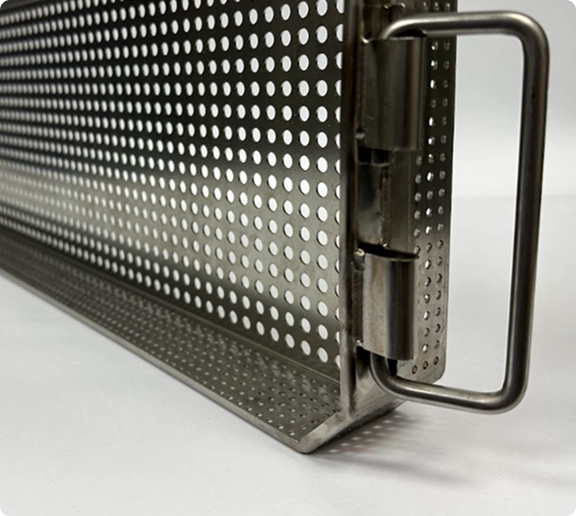
Why Prototype
Sheet Metal Parts?
Validate Fit and Function
A physical prototype allows engineers to confirm whether the component fits its intended space, interfaces correctly with mating parts, and performs as expected in the real application.
Identify Design Problems Earlier
Issues with bend geometry, feature location, weld access, tolerances, or assembly can be easier and less expensive to correct during prototyping than after production has begun.
Improve Manufacturability
Budde evaluates prototype designs in the context of the processes needed to make them. That gives engineering teams an opportunity to improve the design before moving into larger quantities.
Iterate Without Dedicated Tooling
Processes such as CNC laser cutting and press brake forming allow many sheet metal prototypes to be produced directly from digital design data, giving engineers greater flexibility to test and refine designs before investing in more specialized production approaches.
Build With Production in Mind
A successful prototype shouldn’t become impossible or unnecessarily expensive to manufacture at scale. Budde develops prototypes with the transition to repeat production in mind, helping reduce the gap between a working prototype and a practical production part.
Our Sheet Metal
Prototyping Capabilities
Budde can support projects at multiple stages of product development, from an early idea through a refined prototype ready for production.
| Prototype Need | How Budde Can Help |
|---|---|
| Early Concept | Help translate requirements, sketches, or ideas into workable sheet metal geometry |
| Design Validation | Produce physical parts to evaluate fit, function, and overall geometry |
| Forming Validation | Test bend geometry, flange relationships, and manufacturability |
| Assembly Validation | Evaluate how individual components fit together in a larger assembly |
| Material Evaluation | Compare materials or thicknesses when performance requirements are still being defined |
| Design Iteration | Revise geometry based on prototype findings and produce updated versions |
| Production Preparation | Refine successful prototypes for repeat manufacturing |
Prototype requirements vary based on geometry, material, tolerance, quantity, fabrication processes, and testing objectives. Contact Budde to review your application.
What Can a Sheet Metal Prototype Help You Validate?
The most useful prototypes are built around specific engineering questions.
Geometry and Fit
Confirm overall dimensions, clearances, mounting locations, and how the part fits into the surrounding equipment or assembly.
Bend Geometry
Evaluate bend locations, flange lengths, inside radii, and multi-bend geometry before the design becomes a repeat-production component.
Hole and Feature Location
Verify that mounting holes, slots, cutouts, tabs, and other features align with mating components and remain functional after forming.
Material and Thickness
A prototype can help determine whether the selected material and gauge provide the required stiffness, weight, formability, and performance.
Assembly Strategy
Test how multiple components locate, fasten, weld, and assemble before finalizing the production design.
Tolerance Requirements
Physical testing can help distinguish dimensions that truly require tight control from those where broader fabrication tolerances will perform just as well.
From First Prototype
to Better Design
The first prototype doesn’t always need to be the final design.
In fact, one of the primary benefits of prototyping is learning what should change before production.
A typical iteration may reveal opportunities to:
- Adjust bend locations or flange lengths
- Reposition holes and slots
- Change material thickness
- Improve weld access
- Simplify assembly
- Eliminate unnecessary features
- Relax non-critical tolerances
- Consolidate multiple components
- Make the part easier to manufacture repeatedly
Budde’s engineering and fabrication teams can use what is learned from each prototype to help refine the design.
Our existing approach is built around that flexibility: if a prototype needs refinement, Budde can continue working through the design until the part is ready to move forward.
What to Send for a Sheet Metal Prototype
Clear project information helps Budde understand what you are trying to learn from the prototype and reduces unnecessary questions during quoting.
Useful information includes:
01
CAD Files and Drawings
Provide available 3D models and drawings showing geometry, dimensions, and critical features.
02
Material and Thickness
Identify the intended material, grade, and thickness. If those decisions are still being evaluated, include the functional requirements so alternatives can be discussed.
03
Prototype Quantity
Let us know how many prototype parts you need and whether you anticipate additional design iterations.
04
Critical Dimensions and Tolerances
Identify which dimensions affect fit, function, or assembly. This helps Budde focus manufacturing and inspection attention where it matters.
05
Mating Components
If the prototype interfaces with other parts, providing drawings or relevant dimensions for those components can help identify fit-up issues.
06
Testing Goals
Tell us what you need the prototype to prove. Fit testing, load evaluation, assembly validation, appearance, and process verification may lead to different fabrication priorities.
07
Expected Production Volume
If the prototype is intended to become a production part, anticipated future quantities help Budde evaluate the design with scalability in mind.
The more context we have about what happens after the prototype, the better we can help develop a part that transitions effectively into production.
Designed to Scale
Beyond the Prototype
A working prototype is an important milestone, but for many manufacturers, the real goal is a reliable production part.
Budde supports sheet metal prototypes, short runs, low- to mid-volume production, and repeat manufacturing. That means the lessons learned during prototype development can carry directly into future orders.
As the design moves toward production, our team can help evaluate:
- Manufacturing repeatability
- Production quantities
- Material utilization
- Fabrication sequence
- Assembly efficiency
- Tolerance requirements
- Inspection needs
- Opportunities to reduce unnecessary cost
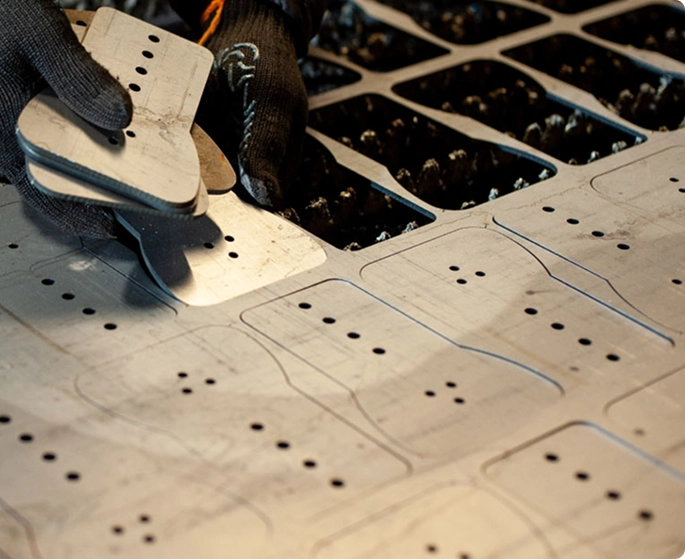
More Than a Prototype Shop
Bring us a finished CAD model, a design that still needs refinement, a rough sketch, or an early-stage concept. Our engineering and fabrication teams can help turn it into a physical prototype, learn from the result, and develop a practical path toward production.