From Design to Finished Component
Manufacturers depend on consistent, repeatable sheet metal components to keep production moving. Whether you’re sourcing brackets, enclosures, panels, weldments, or structural assemblies, understanding the sheet metal manufacturing process can help improve part performance, reduce costs, and shorten lead times.
The most successful projects begin with designs that align with manufacturing best practices and a fabrication partner capable of managing every stage of production under one roof.
What Is the Sheet Metal Manufacturing Process?
The sheet metal manufacturing process is the series of operations used to transform flat sheet metal into finished components or assemblies. Depending on the application, a part may pass through several manufacturing stages before it is ready for installation or shipment.
While every project is different, most sheet metal manufacturing follows a similar workflow:
- Engineering and design review
- Material selection
- Cutting
- Forming and bending
- Welding or assembly
- Secondary finishing operations
- Inspection and quality verification
Each stage directly impacts dimensional accuracy, production efficiency, and overall manufacturing cost.
Step 1: Design Review and Manufacturability
Before fabrication begins, manufacturers evaluate the design for manufacturability.
This review identifies opportunities to simplify production while maintaining functional requirements. Engineers look for potential issues such as:
- Bend radii that exceed material capabilities
- Features positioned too close to bend lines
- Tight tolerances that increase manufacturing complexity
- Hole sizes and spacing that may affect forming
- Opportunities to reduce the number of fabricated components through design optimization
A manufacturability review often prevents expensive production issues before material is ever cut.
For production programs, this early collaboration frequently improves both quality and long-term production efficiency.
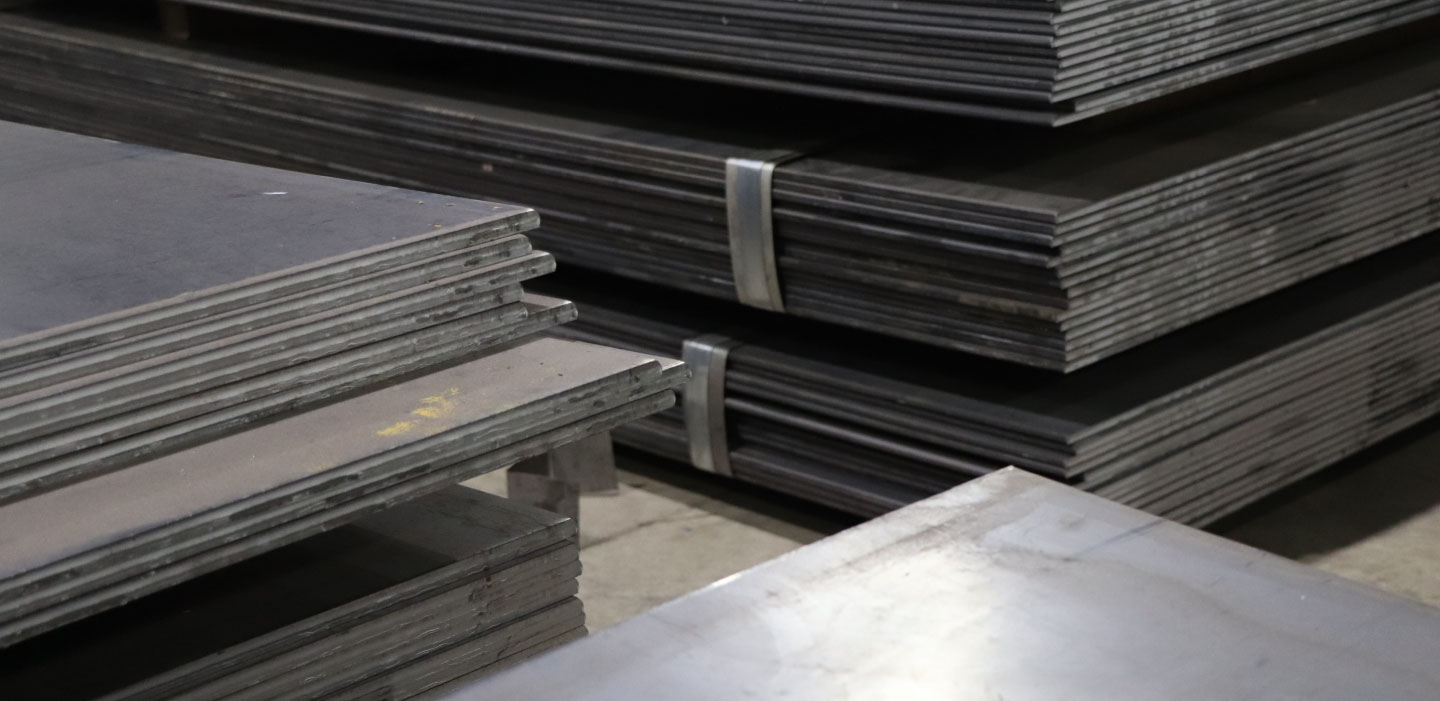
Step 2: Material Selection
Selecting the appropriate material affects strength, corrosion resistance, weldability, weight, and cost.
Common sheet metal materials include:
- Carbon steel
- Stainless steel
- Aluminum
- Galvanized steel
- Specialty alloys for demanding environments
Material thickness also plays an important role. Thicker materials increase structural rigidity but require greater forming force and may influence bend radii, tooling selection, and welding procedures.
Manufacturers balance mechanical performance with manufacturability to ensure the final component meets both engineering and production requirements.
Step 3: Precision Cutting
Once material is selected, the first manufacturing operation is typically cutting.
Modern fabrication shops use CNC-controlled equipment to produce highly accurate blanks before forming.
Depending on part geometry and production requirements, cutting processes may include:
- Fiber laser cutting
- CNC punching
- Saw cutting
- Shearing
Laser cutting has become the preferred process for many precision components because it delivers:
- Tight dimensional accuracy
- Clean edge quality
- Minimal heat-affected zones
- High repeatability
- Efficient nesting that reduces material waste
Accurate cutting establishes the dimensional foundation for every downstream operation.
Step 4: Forming and Bending
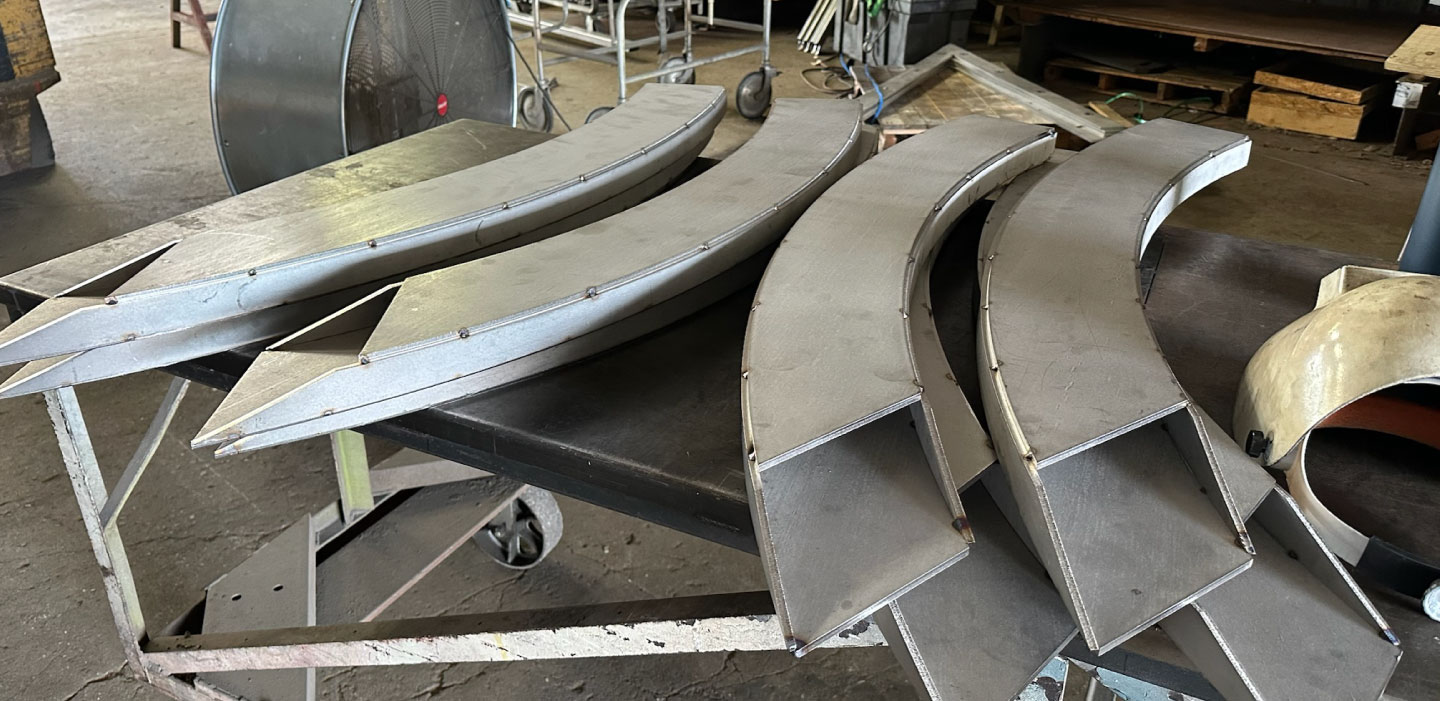
After cutting, flat blanks are transformed into three-dimensional components using press brakes and specialized tooling.
Precision forming creates features such as:
- Flanges
- Channels
- Boxes
- Mounting brackets
- Structural supports
- Complex multi-bend geometries
Successful forming depends on several variables working together:
- Material type
- Material thickness
- Grain direction
- Bend sequence
- Tool selection
- Springback compensation
Experienced fabricators understand how these variables interact to consistently produce accurate parts across both low- and high-volume production runs.
Proper bend sequencing also minimizes distortion while reducing unnecessary handling throughout production.
Step 5: Welding and Assembly
Many fabricated products require multiple components to be joined into larger assemblies.
Depending on the application, fabrication shops may utilize:
- MIG welding
- TIG welding
- Resistance welding
- Mechanical fastening
- Hardware insertion
Proper fixturing is essential during assembly to maintain dimensional consistency while minimizing distortion caused by welding heat.
For industrial equipment manufacturers, welded assemblies often eliminate the need for additional machining or downstream fabrication, simplifying final assembly operations.
Step 6: Secondary Operations
Many finished products require additional processing after fabrication.
Common secondary operations include:
- Hardware installation
- Tapping
- Countersinking
- Deburring
- Grinding
- Surface finishing
- Powder coating coordination
- Assembly
Integrating these services into a single manufacturing workflow helps reduce supplier complexity while improving scheduling and quality control.
Instead of managing multiple vendors, customers receive completed components that are ready for production.
Step 7: Inspection and Quality Verification
The final stage of the sheet metal manufacturing process ensures every part meets customer specifications.
Inspection activities may include:
- Dimensional verification
- Critical feature inspection
- Weld inspection
- Assembly verification
- Visual quality inspection
For production programs, documented inspection procedures help maintain consistency across thousands of identical parts.
Quality verification is especially important for manufacturers serving industrial equipment, agriculture, heavy equipment, and other demanding applications where dimensional variation can affect downstream assembly.
Factors That Influence Manufacturing Success
Although the manufacturing process follows a defined sequence, overall project success depends on several additional factors.
Design Complexity
Complex geometries may require multiple forming operations, custom tooling, or specialized fixtures that influence production time and cost.
Production Volume
Prototype quantities often require different manufacturing strategies than repeat production. Equipment selection, tooling investments, and process optimization typically change as production volumes increase.
Material Availability
Lead times can be affected by raw material availability, especially for specialty alloys or uncommon thicknesses.
Working with a fabricator that maintains strong supplier relationships helps minimize production disruptions.
Manufacturing Capabilities
Fabricators that offer integrated services reduce handoffs between suppliers, improving communication, quality, and scheduling throughout the project.
Choosing the Right Manufacturing Partner
A well-designed sheet metal component can still encounter production challenges if the manufacturing partner lacks the necessary capabilities or process controls.
When evaluating a sheet metal manufacturer, consider whether they offer:
- Engineering support during design
- Precision laser cutting
- CNC forming capabilities
- Certified welding
- Assembly services
- Quality inspection processes
- Experience supporting long-term production programs
A partner that understands both engineering requirements and production realities can identify improvements that reduce cost while maintaining product performance.
Partner with Budde Sheet Metal Works
The sheet metal manufacturing process involves much more than cutting and bending metal. Every stage, from engineering review through final inspection, contributes to product quality, production efficiency, and long-term reliability.
If you’re looking for a trusted fabrication partner for your next project, request a quote from Budde Sheet Metal Works to discuss your requirements with our team.