A sheet metal component can look complete in CAD and still reveal unexpected challenges once it reaches the fabrication floor. Bend behavior, tooling access, material springback, hole placement, weld distortion, and assembly fit can all affect whether the design performs as intended.
Sheet metal prototyping services give engineers an opportunity to identify these issues before committing to production. By fabricating physical parts using processes that reflect eventual manufacturing methods, teams can evaluate fit, function, manufacturability, and cost while changes are still relatively easy to make.
For OEMs developing industrial, agricultural, and heavy equipment, a well-planned prototype can shorten the path from engineering to dependable production.
What Are Sheet Metal Prototyping Services?
Sheet metal prototyping involves producing one or a small number of fabricated components for testing and design validation before repeat production begins.
Depending on the part, the process may include:
- Laser cutting
- CNC punching
- Press brake forming
- MIG or TIG welding
- Hardware insertion
- Machining
- Assembly
- Finishing
- Dimensional inspection
The objective is not simply to create a sample that looks like the finished product. A useful prototype should provide information about how the component will actually be manufactured and perform.
That makes prototyping especially valuable for complex components involving multiple bends, tight interfaces, welded assemblies, or parts that must integrate with existing equipment.
What Can a Sheet Metal Prototype Validate?
The most effective prototype programs begin with a clear question: What does the engineering team need to learn before production?
A prototype can help validate several areas.
Fit and Assembly
Physical prototypes allow teams to determine whether mounting holes align, mating components fit properly, clearances are sufficient, and the fabricated part integrates with the larger assembly.
Discovering a small interference issue during prototyping is far preferable to discovering it after hundreds of components have been produced.
Form and Geometry
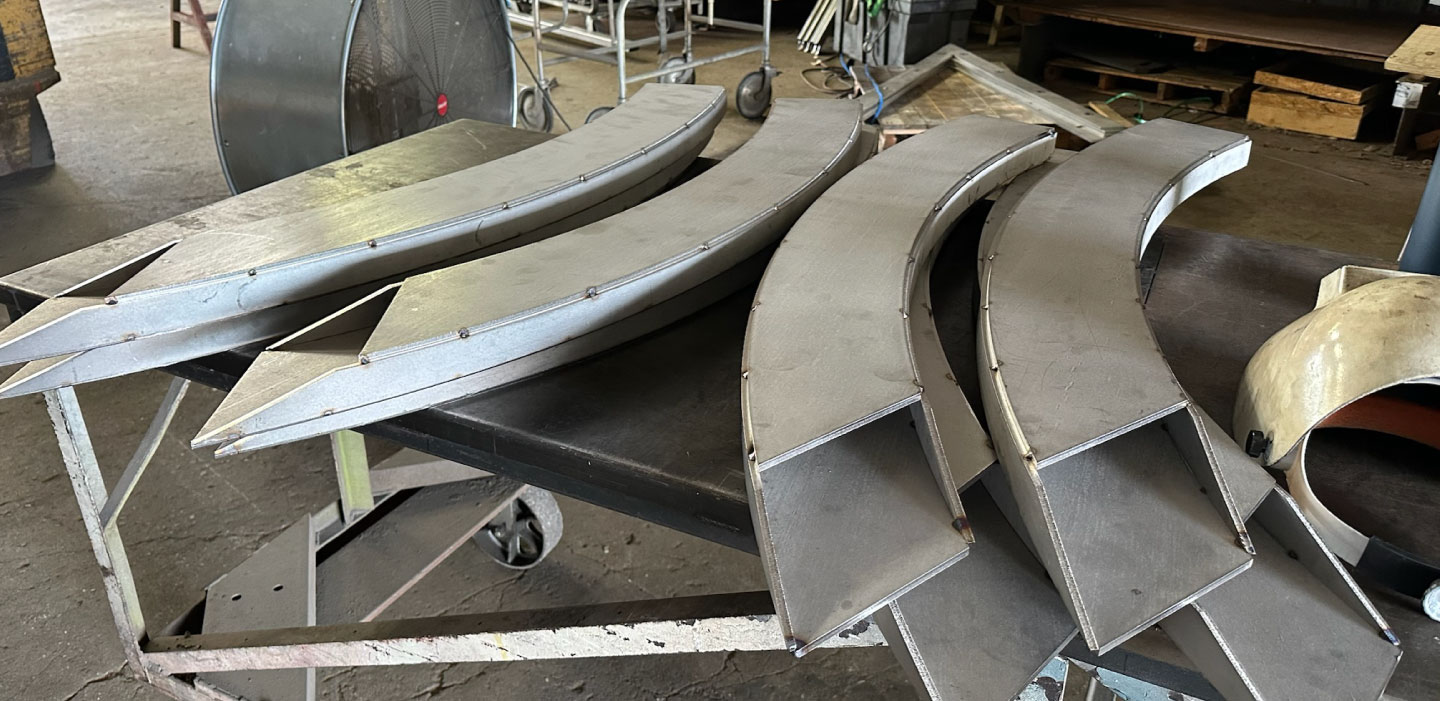
Bending sheet metal introduces variables that are difficult to eliminate entirely in a digital model. Bend allowance, bend radius, springback, tooling, and forming sequence can influence final dimensions.
A strong sheet metal partner can provide additional guidance on designing bend radii, flanges, reliefs, and features around the realities of fabrication.
Function and Performance
A prototype also gives engineers a physical component for functional testing. Depending on the application, that might include evaluating stiffness, load capacity, vibration resistance, accessibility, or integration with mechanical and electrical systems.
The findings can then inform the next design iteration.
Prototyping Is an Opportunity to Improve Manufacturability
One of the greatest benefits of sheet metal prototyping services is the opportunity to evaluate Design for Manufacturability (DFM) before production.
A design may be technically possible to fabricate without being efficient to produce repeatedly.
During prototype development, manufacturers and engineers can identify issues such as:
- Features located too close to bends
- Flanges that interfere with tooling
- Unnecessarily tight tolerances
- Difficult weld access
- Excessive numbers of separate components
- Bend sequences that complicate forming
- Nonstandard materials or thicknesses
- Features requiring unnecessary secondary operations
Addressing these issues can simplify fabrication and reduce cost without changing the component’s intended function.
For example, a welded assembly consisting of several pieces might be redesigned to use fewer components and additional bends. A tolerance that was initially applied across an entire drawing might be limited to the few dimensions that actually affect function.
These seemingly small adjustments can become significant when a component moves into repeat production.
Material Selection Should Be Tested Early
Material affects more than strength. It also influences formability, springback, weldability, corrosion resistance, weight, finishing requirements, and cost.
A prototype gives engineers an opportunity to determine whether the specified material behaves as expected during actual fabrication.
Carbon steel, stainless steel, and aluminum can respond differently to cutting, bending, and welding. Even material thickness can influence minimum bend radius, forming force, and dimensional results.
Partner with a team that can help you explore the relationship between material properties and manufacturability in greater detail.
Testing these variables before production helps reduce the risk of specifying a material that creates unnecessary manufacturing challenges.
Use Prototypes to Establish Realistic Tolerances
Tolerance decisions deserve particular attention during prototype development.
Specifying extremely tight tolerances throughout a drawing can increase manufacturing cost without improving the component’s performance. Conversely, tolerances that are too loose can cause alignment and assembly problems.
Sheet metal prototypes provide physical evidence of which dimensions need tighter control and where standard fabrication tolerances are sufficient.
Engineers should pay particular attention to tolerance stacking across multi-bend parts and assemblies. Features located near bends or welds may also require additional consideration because forming and heat input can influence dimensional accuracy.
This sheet metal tolerances guide provides practical recommendations for matching tolerances to fabrication requirements and applying tighter specifications where they are functionally necessary.
Prototype With Production in Mind
A successful prototype is not necessarily a successful production design.
A one-off part can sometimes be fabricated using additional manual adjustments or specialized setups that would become inefficient at higher quantities. If the component is ultimately expected to enter repeat production, the prototype should be evaluated with scalability in mind.
Before approving a design, consider:
- Can standard tooling be used?
- Is the forming sequence repeatable?
- Can welds be accessed consistently?
- Are fixtures required?
- Are materials readily available?
- Can critical dimensions be inspected efficiently?
- Can the same process produce consistent results across larger quantities?
Using production-representative processes during prototyping makes the transition from prototype to production more predictable. Integrated laser cutting and precision bending can also help maintain alignment between cut features and formed dimensions as a design moves toward repeat manufacturing.
When Should Manufacturers Use Sheet Metal Prototyping Services?
Prototyping is particularly useful when developing:
- New equipment or product designs
- Complex formed components
- Custom brackets, housings, and enclosures
- Welded frames and assemblies
- Replacement parts without complete documentation
- Components requiring fit checks with existing equipment
- Redesigned parts intended to reduce manufacturing cost
It can also be valuable when changing materials, consolidating components, or transferring an existing design to a new fabrication process.
In each case, the prototype becomes a practical engineering tool for reducing uncertainty before larger purchasing and production commitments are made.
Move from Prototype to Production with Budde Sheet Metal Works
Budde Sheet Metal Works supports manufacturers with sheet metal prototyping services that connect early design development with production-ready fabrication. Our precision sheet metal fabrication capabilities include prototypes and short runs, along with DFM support and repeat production, helping engineering teams refine designs with scalability in mind.
Whether you’re starting with a detailed CAD model, refining an existing component, or developing a new concept, contact Budde Sheet Metal Works to request a quote and start turning your design into a manufacturable sheet metal part.